
Workforce Management for CIOs
CIOs control workforce system architecture, data consistency, and platform scalability across the enterprise.
- Define interoperable system architecture connecting scheduling, time tracking, payroll, and operations
- Ensure master data consistency, API-driven integration, and cloud scalability across all workforce systems
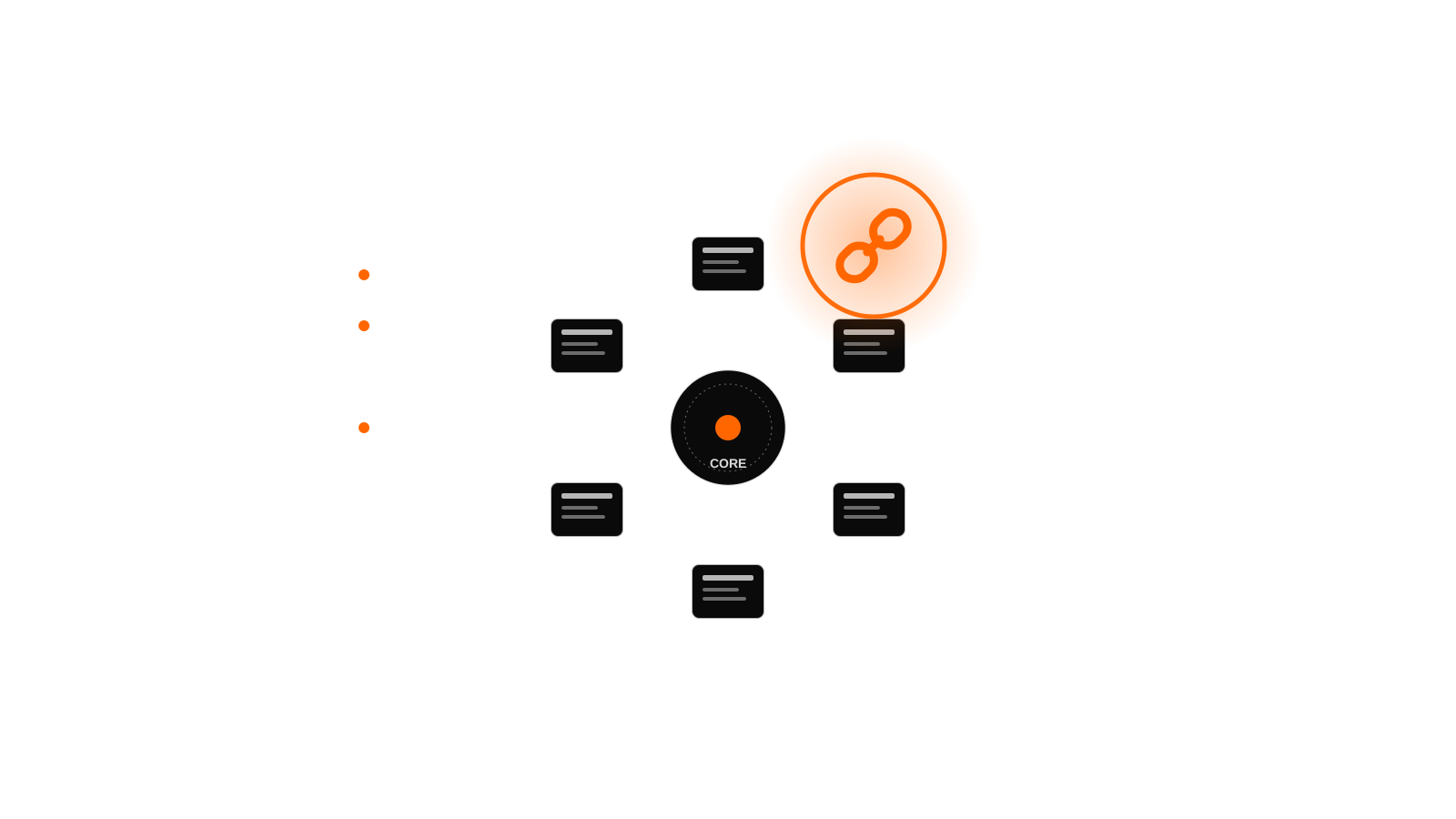
Controlling System Architecture, Data Consistency, and Workforce Platform Scalability
Chief Information Officers (CIOs) are responsible for ensuring that workforce management systems operate as a unified, scalable platform. They define how scheduling, time tracking, payroll, and operational systems connect—ensuring interoperability and consistent workforce data across the enterprise.
They operate under constant pressure: legacy systems must be integrated, data must remain consistent, and workforce processes depend on reliable system performance. When systems are fragmented, errors propagate across payroll, compliance, and operations. Workforce management provides control over architecture, data governance, and cloud scalability—ensuring workforce processes run on a connected and reliable foundation.
Eliminate system fragmentation—unify workforce architecture across the enterprise
- Integrate scheduling, time tracking, payroll, and operations
- Ensure scalable, API-driven system connectivity
CIOs: Key Concepts
What is workforce management for CIOs?
It is the system architecture that connects workforce data, applications, and processes across scheduling, time tracking, payroll, and operations.
Why is it important for CIOs?
Because workforce processes depend on consistent data across systems. Workforce management ensures that integrations are stable and data flows are controlled.
How is it different from other roles?
CIOs do not manage workforce execution—they ensure that the systems enabling those processes are reliable, scalable, and integrated.
Why It Matters: Where Systems and Data Break
Workforce processes depend on multiple systems working together—and when they don't, issues appear across the organization.
Without structured workforce management:
- Employee data is duplicated across systems with inconsistent updates
- Scheduling outputs do not match time tracking or payroll inputs
- Manual interfaces are required to move data between systems
- System changes require adjustments across multiple disconnected tools
- Errors in one system propagate into payroll, reporting, and compliance
These issues are not isolated. A mismatch in working time data can affect payroll calculations, compliance reporting, and operational decisions simultaneously. Workforce management matters because it defines whether workforce processes are supported by a unified system or a fragmented architecture.
How CIOs Use Workforce Management
CIOs use workforce management to define system structure, control data consistency, and ensure scalability across the organization.
Define workforce system architecture →
They decide how workforce management integrates with HR systems, payroll, ERP, and operational platforms.
Control data flows across applications →
They ensure that employee data, working time, and scheduling information are consistent across all systems.
Replace fragmented tools with a unified platform →
They reduce the number of disconnected applications used for workforce processes.
Manage integrations and system interfaces →
They design and maintain how systems exchange data, ensuring stability and accuracy.
Ensure system scalability across locations and users →
They support expansion by ensuring the platform handles increasing workforce complexity.
Maintain data governance and security →
They define access controls and ensure workforce data meets security and compliance requirements.
Core Capabilities for CIOs
Workforce management enables CIOs to control the technical foundation of workforce operations.
-
Consolidate workforce systems into one platform CIOs replace fragmented tools with a unified system that supports all workforce processes.
-
Ensure consistent data across all applications They align data structures so that scheduling, time tracking, and payroll operate on the same information.
-
Control integrations between enterprise systems They define how workforce management connects with HR, payroll, and ERP systems.
-
Scale workforce systems across regions and operations They ensure that the platform supports growth without performance or integration issues.
-
Enforce data governance and security standards They ensure that workforce data is protected, controlled, and compliant across systems.
Business impact
Operational impact
CIOs ensure that workforce systems support scheduling, payroll, and operations without disruption or data inconsistencies.
Financial impact
They reduce costs related to system maintenance, manual data corrections, and complex integrations.
Risk and compliance impact
They prevent data inconsistencies and system failures that can lead to compliance violations or operational errors.
Key Challenges for CIOs
CIOs face structural challenges that affect system reliability and scalability:
- Managing multiple disconnected workforce-related systems
- Ensuring consistent data across HR, scheduling, and payroll
- Handling complex integrations between enterprise platforms
- Scaling systems across locations and business units
- Maintaining performance under high data and user load
- Implementing regulatory or process changes across systems
Role of Technology
Technology is the layer CIOs control—and workforce management defines how that layer supports operations.
A unified workforce management platform reduces system fragmentation, standardizes data flows, and simplifies integration. Instead of maintaining multiple tools and interfaces, CIOs manage one system where workforce data is consistent and processes are connected.
This reduces operational risk and allows IT to focus on maintaining system stability, scalability, and long-term architecture decisions.
How CIOs Fit Into Workforce Management
CIOs ensure scheduling systems are integrated within a scalable and interoperable architecture.
- Manage API-based integration between scheduling and enterprise systems
- Ensure scheduling data is synchronized across platforms
- Maintain system performance for high-volume scheduling operations
CIOs control how working time data is structured and managed across systems.
- Define master data models for time and attendance
- Ensure accurate data exchange via APIs
- Maintain consistency of time data across applications
CIOs ensure workforce data flows reliably into payroll systems.
- Manage API interfaces between workforce management and payroll
- Ensure accurate transfer of pay-relevant data
- Prevent inconsistencies caused by fragmented data sources
CIOs provide the data foundation for reporting and decision-making.
- Structure workforce master data for cross-system reporting
- Ensure interoperability between workforce and analytics platforms
- Support integration with BI and reporting tools
CIOs enforce governance, security, and regulatory compliance across systems.
- Implement data governance frameworks and access controls
- Ensure auditability and traceability of workforce data
- Support compliance with data protection and labor regulations
Key Questions for CIOs
How do CIOs ensure workforce data consistency across systems?
They define master data structures, API-based integrations, and synchronization rules to ensure workforce data is consistent and aligned across all systems.
How do CIOs reduce system complexity in workforce management?
They consolidate fragmented tools into a unified workforce management platform and standardize integrations using APIs.
How do CIOs manage integrations between workforce systems and enterprise applications?
They design and maintain API-based interfaces to ensure stable data exchange and interoperability between workforce management, HR, payroll, and ERP systems.
How do CIOs ensure scalability of workforce systems?
They implement scalable cloud architecture that supports increasing users, locations, and data volumes while maintaining performance and reliability.
What happens when workforce systems are not integrated?
Data inconsistencies increase, manual corrections are required, and workforce processes such as scheduling, payroll, and reporting become unreliable.
When workforce systems are not integrated, data becomes inconsistent—and risk spreads across the enterprise
- Consolidate workforce systems and ensure consistent data across all processes
- Maintain scalable, secure, and reliable workforce technology infrastructure